At a U.S. congressional hearing on February 4, former U.S. Ambassador-at-Large for International Religious Freedom Sam Brownback stated that authoritarian regimes have realized that violence alone cannot eradicate religious belief. Instead, they are turning to technology to “reshape, replace, and manage” faith itself. He noted that modern religious control no longer stops at physical suppression but seeks to penetrate human conscience and the very core of belief—describing this trend as a “battle for the soul” waged against essential doctrines.
From Church Raids to “24-Hour Presence” Surveillance
According to the U.S. Commission on International Religious Freedom (USCIRF) report Religious Freedom and High-Tech Surveillance in China, the Chinese government’s management of Christians, Muslims, and other faith groups has shifted structurally in recent years. Previously, authorities often relied on sealing churches and temples, detaining pastors, and imprisoning faith leaders. Today, these overt methods are being replaced by subtler yet more enduring forms of digital control.
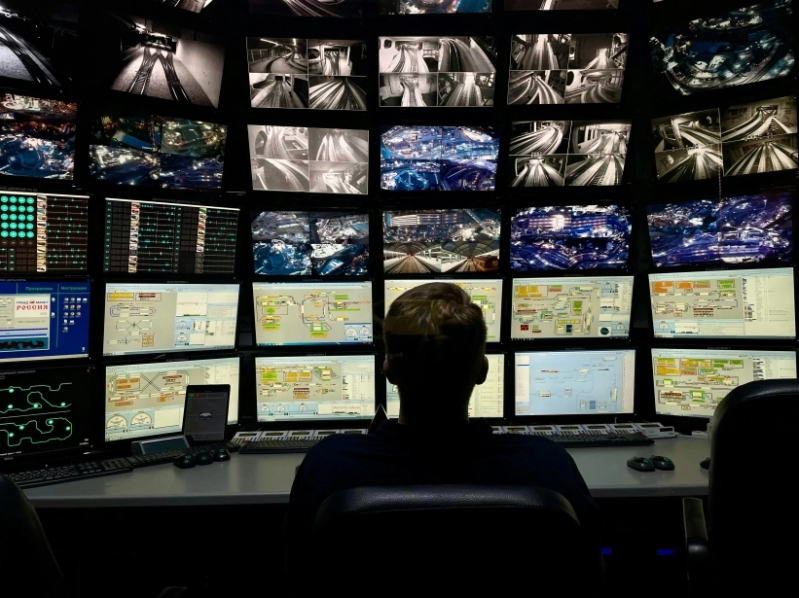
Through big data analytics, religious activity is no longer monitored only through reports after the fact—it is now subject to round-the-clock, automated, and contactless scrutiny. Even when believers move freely and live normal lives, they remain under continuous invisible surveillance.
More restrictions are now embedded in everyday life and technology systems instead of overt public actions. According to Grace Jin Drexel, daughter of Pastor Jin Mingri, the Chinese authorities ordered Zion Church, founded by her father, to install facial-recognition cameras on the pulpit, altar, and congregation area to record members’ identities, attendance, and movements in real time. The church refused to comply and was subsequently subjected to sustained repression, including closure of multiple meeting sites nationwide, confiscation of property, and detention of church leaders. Authorities also harassed thousands of believers by threatening their jobs, pensions, and livelihoods.
Reshaping Doctrine Through Technology
Grace Jin Drexel noted that digital technology has become a primary catalyst for the further politicization and 'Sinicization' of religion. Through algorithmic censorship of online sermons, digital Scripture, and religious content on social media, faith narratives are being continually reshaped to emphasize political loyalty and obedience to official ideology.
She explained that these technological tools not only regulate behavior but also redefine theological interpretation. Content approved by authorities is given higher algorithmic visibility, while religious expressions deemed unsuitable are systematically down-ranked, deleted, or flagged. This quiet process requires no public trials yet gradually alters the messages preached from church pulpits—placing obedience to political power above devotion to God.
Invisible Punishment: More Lasting Than Prison
Human rights advocates warn that the most troubling aspect of digital religious control is its integration with China’s social credit and public service systems. In today’s China, faith does not necessarily lead to imprisonment but often results in a range of “social consequences.” Some believers face restrictions in employment, travel, loans, or their children’s education due to religious background.
These “invisible punishments” remain elusive to outside observers while exerting persistent pressure on believers and their families—forcing them to choose between faith and survival, while silently eroding human dignity and freedom of religion.
Former Ambassador Sam Brownback remarked that modern religious control no longer merely targets the body but now seeks to reach into the conscience and faith of individuals, calling it a “battle for the soul” fought against fundamental religious truth.
Digitalized Religious Control Crossing Borders
Brownback also emphasized that this digital repression is not confined to China. Technologies used to monitor religious venues and believers are being exported to other nations and may gradually become a “standard feature” of authoritarian governance. The experience of the Jin family exemplifies this trend—Grace testified that even after they relocated to the United States, they continued to experience threats and stalking, showing that digital persecution can extend beyond national borders.
“Freedom in Digital Space Is Also Freedom of Faith”
Brownback stated, “If believers are allowed to worship in the physical world but are comprehensively monitored in the digital world, that is not true freedom. The Church today faces not only iron gates and prison cells, but also servers, cameras, and unseen algorithms.”
Human rights advocates caution that when faith is filtered by algorithms and defined by data, the battlefield for religious freedom has already shifted. If the international community focuses only on prisons and ignores server rooms, it risks misunderstanding the nature of today’s religious repression.
They call on governments and global institutions to take coordinated action—restricting exports of surveillance technologies, sanctioning entities involved in their development and deployment, and explicitly including “digital religious control” within international human rights agendas.